
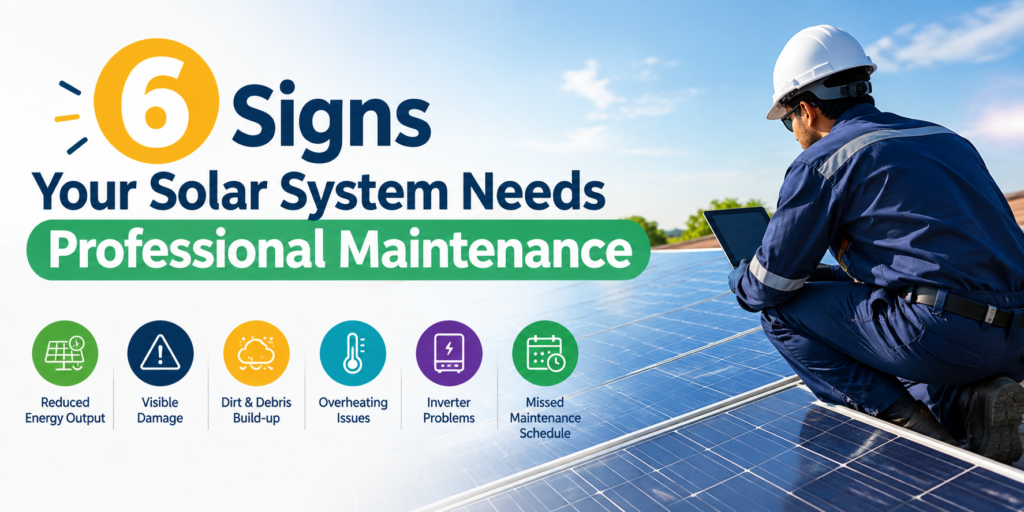
A rooftop solar system in Denver operates under conditions that few other markets present. At roughly 5,280 feet, panels receive stronger ultraviolet exposure than they would at sea level, and the same arrays must withstand spring hailstorms, heavy wet snow, and rapid temperature swings throughout the year. Quality equipment is engineered to perform in these conditions for decades, but every system benefits from periodic attention, and minor issues left unaddressed often lead to costly repairs. As a Denver-based solar roofing company, our team has serviced residential systems throughout the metro area, and we’ve seen how timely maintenance protects both the solar investment and the roof that supports it. Because we live and work in this community, we understand the specific demands Colorado weather places on residential solar. The six warning signs outlined below are the issues we encounter most frequently during service calls, and each one indicates a system that would benefit from professional maintenance. Recognizing them early helps homeowners preserve their energy savings, extend equipment life, and avoid unnecessary damage to their homes.
1. Unexplained Drops in Solar Energy Production
Seasonal variation in output is normal, and production in Denver naturally declines during the winter months when daylight hours are shorter, and the sun sits lower in the southern sky. A decline that doesn’t correspond with the season, however, warrants closer attention.
Common indicators include a summer month that produces noticeably less than the same month the previous year or a utility bill that has risen despite consistent household energy use. Reviewing your monitoring data on a month-over-month and year-over-year basis is the most reliable way to identify this pattern, and a reduction of 10 to 15 percent or more typically justifies an inspection.
Several factors can contribute to reduced production, and accumulated dust, pollen, and airborne debris are among the most common during Denver’s extended dry periods, particularly on low-pitched roofs where precipitation doesn’t clean the panel surface effectively.
New shading from maturing trees or nearby construction can reduce the output of an entire string of panels on systems that use a string inverter. Degraded wiring, failing optimizers, and loose electrical connections produce similar losses and are rarely visible from the ground. A qualified technician can test the performance of individual panels, isolate the source of the decline, and restore the system to its expected output.
2. Solar Inverter Warning Lights or Error Codes
The inverter converts the direct current generated by your panels into the alternating current that powers your home, which makes it one of the most critical components in the system. Residential systems typically use either a central string inverter mounted on an exterior or garage wall or microinverters installed beneath each panel. Both configurations report their status through indicator lights or error codes within the monitoring platform.
A solid green light generally confirms normal operation, while red, amber, or flashing indicators usually signal that the inverter has shut down or detected a fault it can’t resolve automatically. Inverters generally have a shorter service life than solar panels, and with many string inverter warranties running 10 to 12 years compared with the 25-year coverage common for panels, most homeowners should expect at least one inverter replacement over the life of their system.
Heat exposure affects longevity as well, and an inverter mounted on a west-facing wall that receives direct afternoon sun may age more quickly than one installed in a shaded location. We advise against repeatedly resetting an inverter that displays recurring errors, since doing so can mask a developing problem. A service technician can review the fault history, determine if the issue stems from the utility grid, the system wiring, or the inverter itself, and coordinate any warranty claim with the manufacturer.
3. Visible or Suspected Hail Damage
The Denver metro area sits within one of the most hail-prone regions in the United States, and damaging storms occur along the Front Range nearly every spring and summer. Most residential panels are tested to withstand hailstones approximately one inch in diameter, although larger stones can crack tempered glass, bend aluminum frames, and damage mounting hardware.
Hail damage isn’t always apparent from ground level, since microcracks within the solar cells can exist beneath glass that appears intact. These fractures reduce production over time and may expand with each freeze-thaw cycle.
Following a significant storm, homeowners can conduct a basic assessment from the ground by looking for glass fragments in gutters and downspouts, visible cracks or shattering patterns on accessible panels, and dents in roof vents, gutters, or siding that indicate large hailstones. Your monitoring data may also show a sudden drop in output from specific panels, which can help identify the damaged units.
We advise against climbing onto the roof, because damaged panels may still carry electrical current and roofs are hazardous after a storm. Our team performs post-storm inspections throughout the Denver area and provides photo documentation and production records that support homeowners’ insurance claims.
4. Birds, Rodents and Debris Beneath Solar Panels
The sheltered space between solar panels and the roof surface attracts pigeons, which are common throughout the Denver area. Nesting material, droppings, and feathers accumulate quickly once birds establish themselves beneath an array, and this buildup retains moisture against roofing materials, restricts the airflow that helps regulate panel temperature, and can damage exposed wiring. Squirrels present a similar risk, and chewed wiring can take part of a system offline while creating a potential electrical hazard.
Frequent bird activity around the roofline, nesting material visible along the edges of the array, and debris collecting in gutters all suggest that animals have taken up residence. Removing nests and debris requires working beneath the panels without disturbing electrical connections or damaging the modules. During a professional service visit, technicians clear the accumulated material, inspect the wiring for damage, and install mesh guards along the perimeter of the array to prevent animals from returning, which is a straightforward measure that protects both the solar equipment and the roof for years to come.
5. Roof Leaks Near Solar Mounting Points
Rooftop solar systems are secured with mounting hardware that penetrates the roof surface, and each attachment point must remain properly sealed for the life of the installation. Denver’s frequent freeze-thaw cycles place continual stress on these seals, since water that enters a small gap freezes overnight, expands, and gradually widens the opening. Over several winters, flashing can loosen, and sealant can deteriorate under intense high-altitude UV exposure, allowing moisture to reach the roof deck and attic. Warning signs include water stains on ceilings beneath the array, damp insulation or musty odors in the attic, and lifted or damaged shingles near the panels.
A leak at a solar mounting point involves both the roofing system and the solar system, which is why the experience of a solar roofer is valuable in these situations. Our team is trained in both disciplines, allowing us to remove and reinstall panels as needed, repair the underlying roof, replace flashing, and reseal each penetration while preserving your roofing and solar warranties.
Contractors who specialize in only one trade may resolve one part of the problem while creating another, which is a risk homeowners can avoid by working with a team experienced in both.
6. Interrupted or Missing Solar Monitoring Data
Most residential systems installed within the past decade include a monitoring application or web portal that reports production data throughout the day. When the platform stops updating, reports zero production on a clear afternoon, or shows extended gaps in daily records, a component somewhere in the system requires attention.
In many cases, the cause is minor, such as a changed Wi-Fi password or a replaced router that disconnected the system’s communication gateway, and homeowners can usually restore the connection by following the manufacturer’s instructions. When the network connection is functioning and the data remains inaccurate, the issue likely lies within the system itself. A tripped breaker, a failed communication component, an accidentally switched disconnect, or a significant inverter fault can each interrupt monitoring.
A loss of monitoring is a concern on its own, because it prevents homeowners from confirming that the system is producing power at all, and an extended outage can result in substantial lost savings. A professional maintenance visit restores monitoring functionality and verifies that every component is operating as designed.
How Often to Schedule Solar Panel Maintenance in Denver
For most Denver homes, we recommend a professional inspection every one to two years, along with an additional inspection after any severe hailstorm or windstorm. Properties near unpaved roads, active construction, or large cottonwood trees may require more frequent cleaning, since these environments deposit dust and debris on panels more quickly.
A comprehensive maintenance visit from our team includes a visual inspection of each panel, an evaluation of racking and roof attachments, electrical testing, inverter diagnostics, a review of monitoring data, and an assessment of the roof surface beneath and around the array. Early fall is an ideal time to schedule this service, as hail season has typically ended and the system can be prepared before winter weather arrives.
Homeowners can also take several simple steps between professional visits. Reviewing monitoring data once a month makes it easier to recognize unusual changes in production, and keeping nearby trees trimmed limits shading while reducing debris. Checking gutters after storms can reveal glass fragments, shingle granules, or nesting material that point to a developing problem. We recommend avoiding pressure washers and abrasive cleaning products, which can damage panel coatings and may void manufacturer warranties.
The Value of a Local Denver Solar Roofing Company
When a solar system needs service, homeowners deserve a provider that responds promptly and follows through. Many national solar companies sell systems in the Denver market without maintaining a meaningful local service presence, leaving customers to work through out-of-state call centers and extended wait times.
Our company is based in Denver, our crews live in the communities we serve, and our reputation is built on the quality of every roof we work on. That local foundation allows us to respond quickly after severe weather and to navigate the building codes and permitting requirements of each metro municipality with confidence. Our experience with Denver’s housing stock is equally important. The metro area includes everything from asphalt shingle roofs on older bungalows to tile and standing seam metal roofs on newer construction, and each material requires a specific approach to mounting, sealing, and repair. Understanding these differences allows our team to service solar equipment without compromising the integrity of the roof beneath it.
We also provide service for systems installed by other companies, including systems whose original installers have closed, relocated, or stopped responding to customers. A significant number of the homeowners we work with today came to us under those circumstances, and we take pride in being a dependable resource for them.
For homeowners considering a new system, our solar installation in Denver reflects the same standard of care, with every design planned around long-term roof health and convenient maintenance access.
Schedule Professional Solar Maintenance With a Trusted Denver Team
If you’ve noticed any of these warning signs, addressing them promptly can prevent a minor issue from becoming a costly repair or a roof leak. Contact our team to schedule an inspection, and we’ll provide a clear, honest assessment of your system’s condition, including confirmation that everything is performing as it should. Your solar system represents a significant investment in your home and in cleaner energy for our community, and we’re committed to helping you protect it for many years to come.